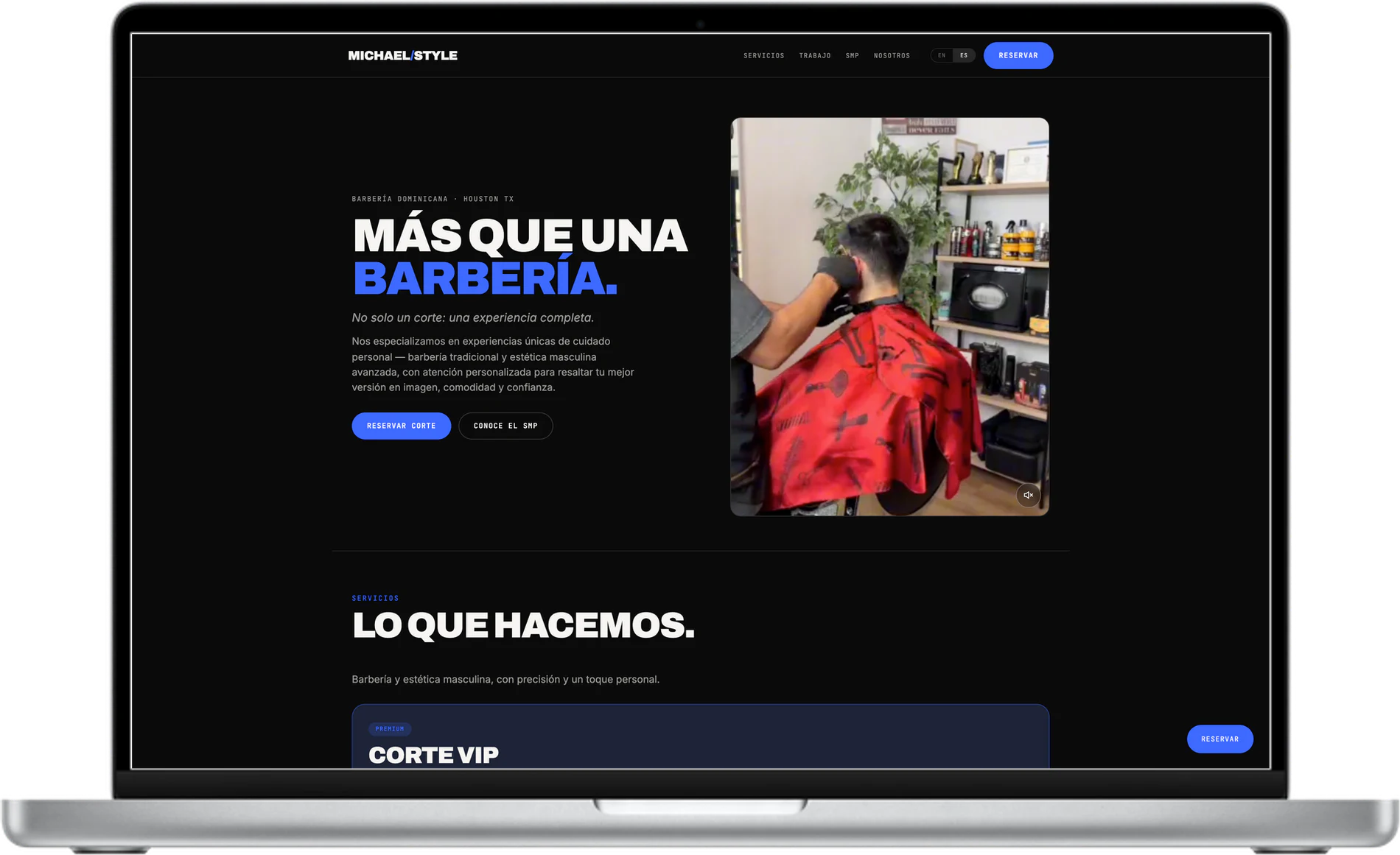
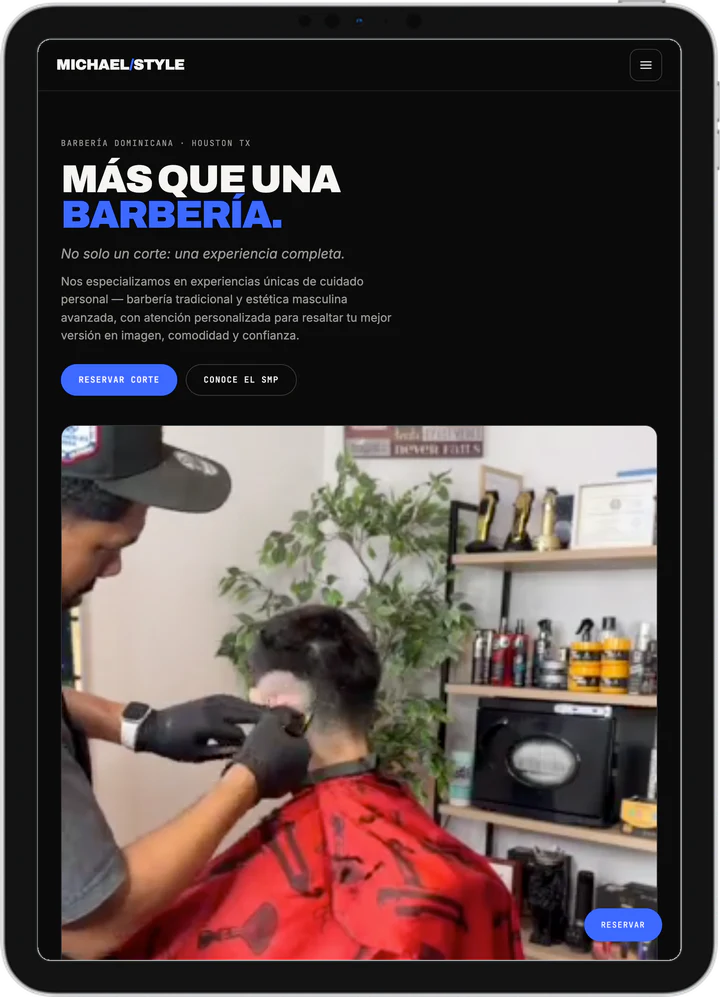
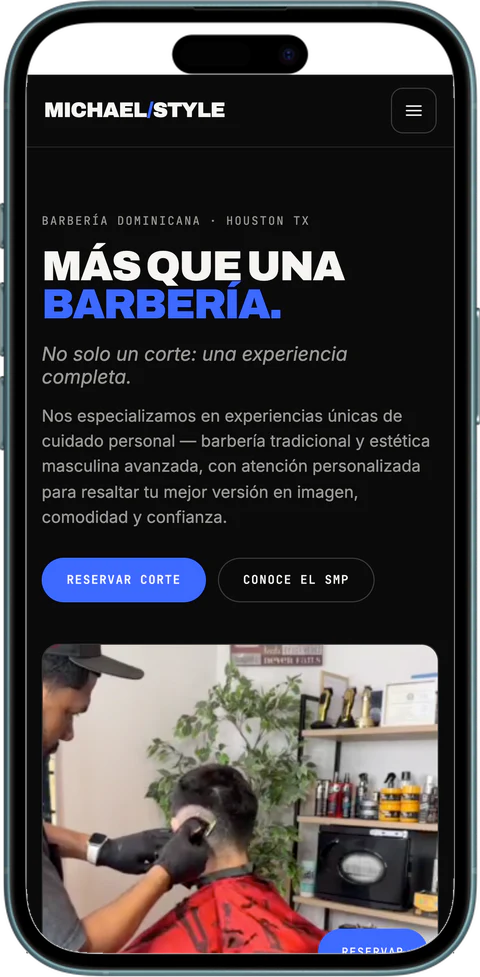
A craft with a following, and no home.
Michael Adonis is a Dominican barber and scalp-micropigmentation artist in Cypress, just outside Houston. Fades, beard sculpting, lineups, kids' cuts and hair restoration — the craft was already there, and so was the audience: a strong Instagram following and a five-star reputation.
But everything he had built lived on someone else's platform. The work sat in a feed, the bookings ran strictly through a third-party app, and between the two there was nothing that belonged to him.
Followers aren't the same as found.
Michael had real reach on Instagram — but reach and local discovery are different things. Someone searching for a barber near Cypress had no reliable way to land on him.
His presence lived entirely on platforms he didn't control. The feed decided who saw the work, and the booking app owned the transaction — and the relationship that came with it.
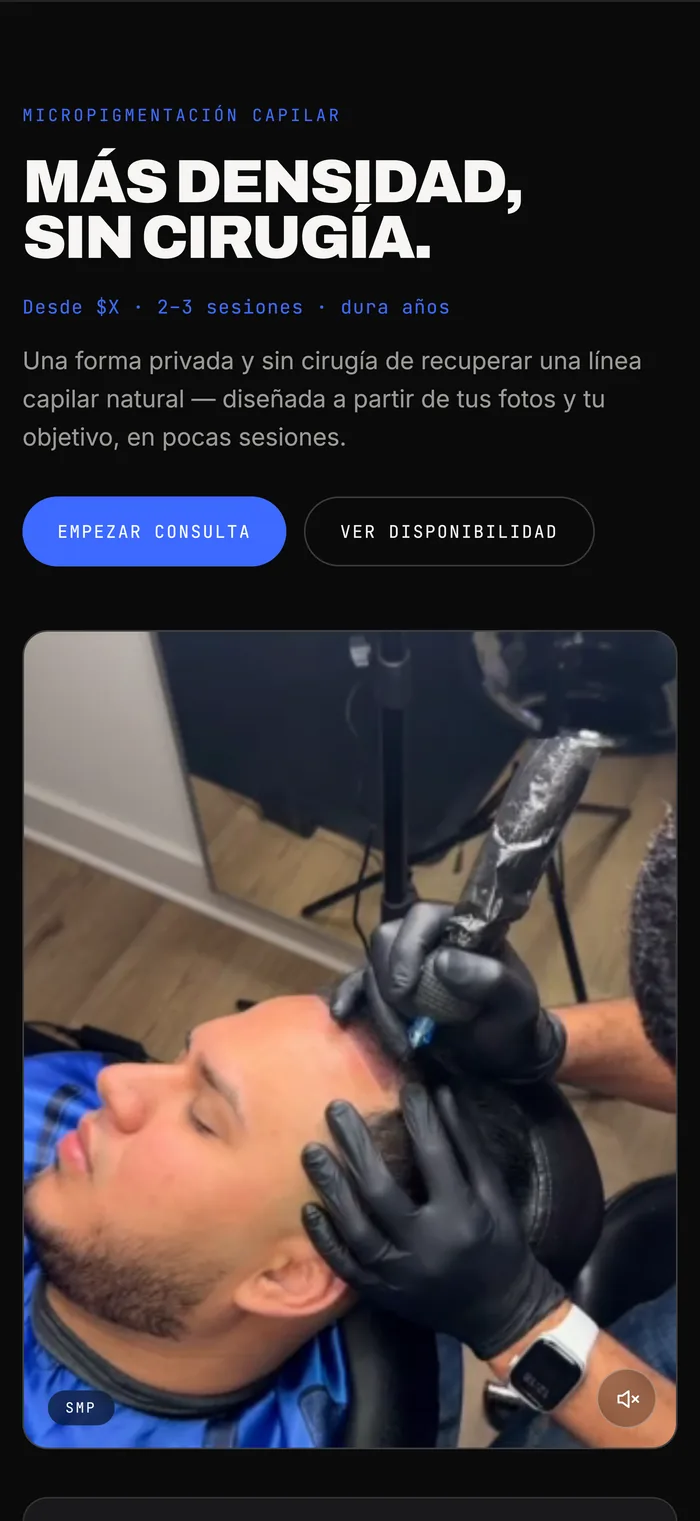
Scalp micropigmentation is a researched, higher-priced decision. A feed post can't explain the process, the number of sessions, or how long it lasts — and there was nowhere to send someone who wanted to understand it.
Two audiences, one studio.
Before designing anything, we looked at how Michael actually earns a client — and at the gap between the person scrolling his feed and the person typing “barbería cerca de mí” into Google.
- His market is bilingual — many clients search and decide in Spanish, while English leads across the wider Houston area.
- Barbering and SMP are two different decisions: one is a habit, the other is researched. They needed separate paths, not one long menu.
- The work is the proof — before-and-after imagery persuades far more than description, especially in hair restoration.
Give the work a home he owns.
The strategy was not to replace what already worked — Instagram and the booking app stay exactly where they are. It was to build the missing center: a site he owns that turns local searches into visits, gives SMP the room it needs to be understood, and hands Michael the keys so the studio can grow without waiting on a developer.
Brand, site, a path for SMP, and the keys.

A launchpad, not a finish line.
The studio launched in July 2026, so the numbers that matter are still ahead. What can be stated today is what changed structurally — and what it costs him to stay online.
This is not a performance claim — the site is weeks old. It is a change in position. Before, Michael's growth was capped by platforms he did not control: the feed decided reach, the app owned the customer. Now the studio has an address of its own, a path built for the service that carries the most value, and an owner who can change anything on it the same afternoon he decides to. That is the difference between posting and building — and it is the part that compounds.
The work was always the proof. What was missing was somewhere it could be found — and someone handing over the keys instead of holding on to them.