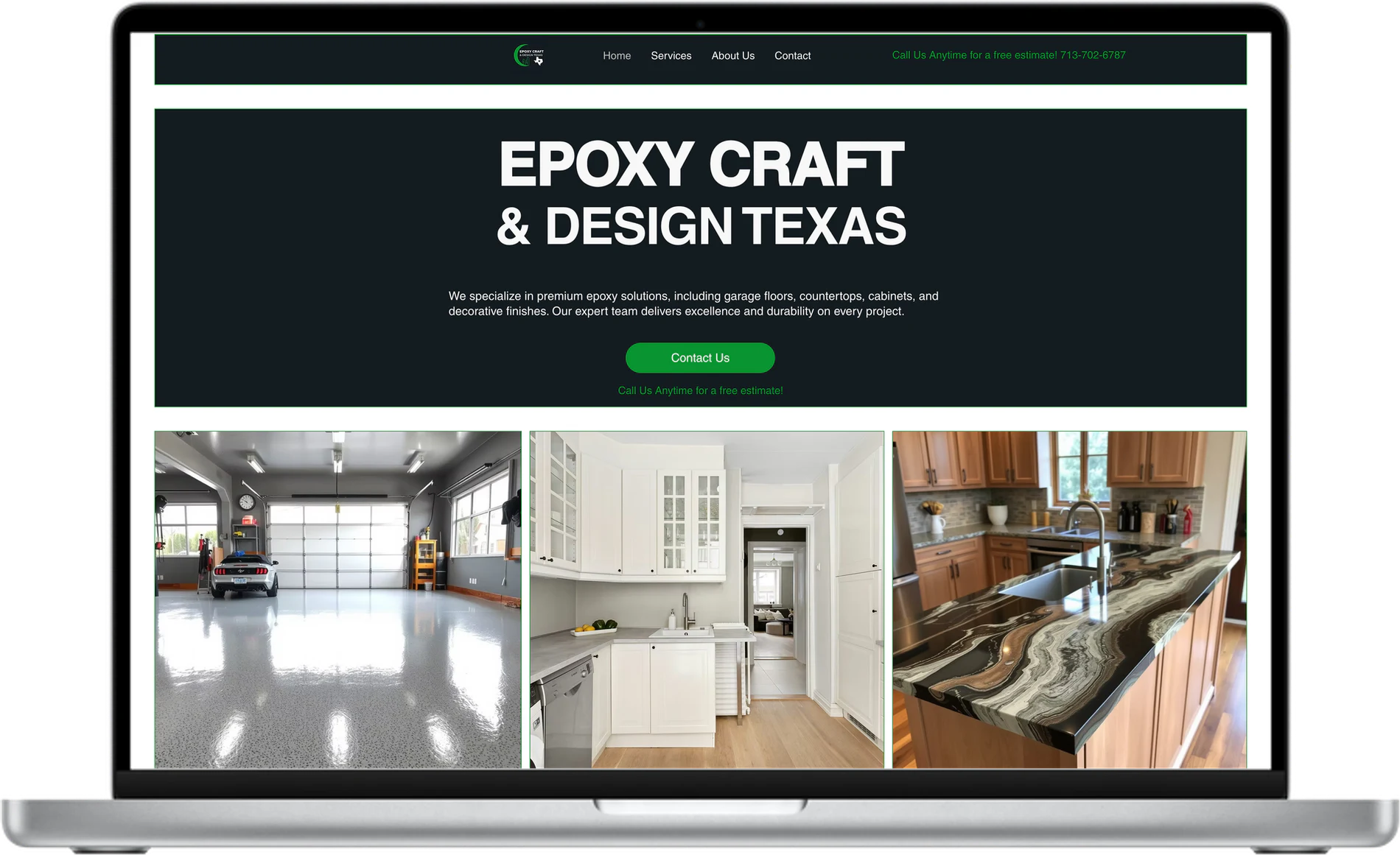
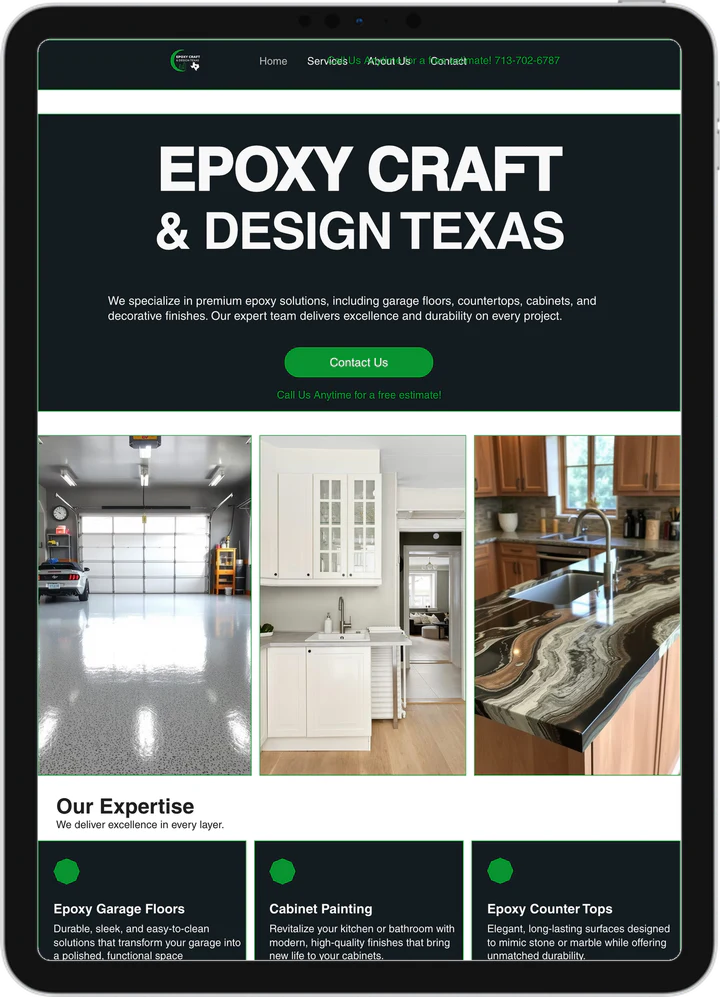
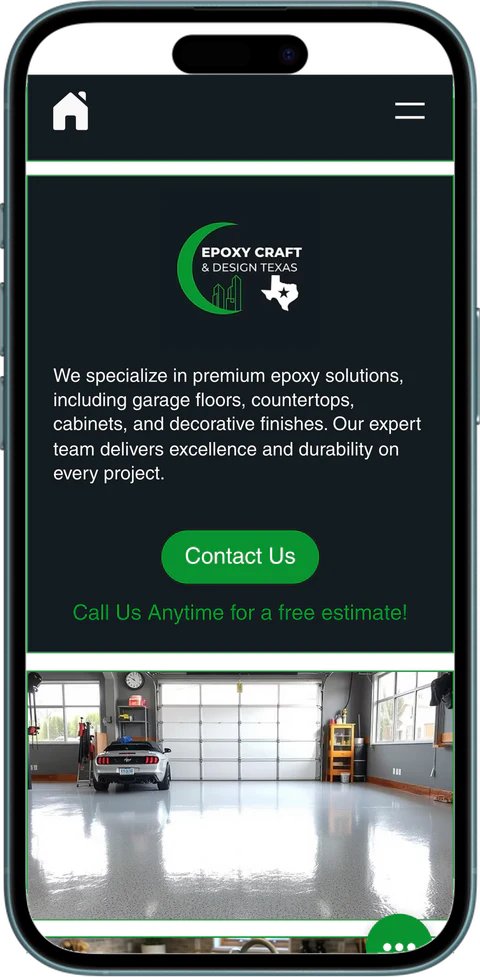
A service, a region, and little else.
Epoxy Craft & Design Texas — a Ricasti Group venture — is a premium epoxy and concrete coatings company. They came to us with a service, a region, and little else: no locked-in name, no brand, no digital presence. We were asked to build the entire customer-facing business.
They were launching cold into one of the most competitive home-services markets in the country — Houston and Katy — where a homeowner deciding who pours a floor they'll live on for a decade does not hand that to an unknown name.
Starting from zero, in a crowded market.
In a trade that runs on trust and referrals, a brand-new company has neither — in a market saturated with established contractors.
A large share of the customer base speaks Spanish, yet most competitors marketed in English only — leaving a real audience underserved.
Epoxy is rarely needed today — people need it months later. Marketing had to build memory, not just chase the click, and there was no infrastructure to catch a lead once attention arrived.
How a homeowner chooses who does the floor.
Before building, we mapped the market and the buyer: how a homeowner actually chooses a coatings contractor, and where a brand-new name could realistically win.
- Houston and Katy are saturated with established contractors — trust and referrals decide who gets the job.
- A large share of the market speaks Spanish, yet competitors marketed in English only — an open lane to own.
- Epoxy is a “someday” purchase — the work has to build memory for the day the floor finally bothers someone enough.
A business launch, not a logo project.
We treated this as a business launch, not a logo project: build a real brand, give it a digital home that converts, document real jobs as bilingual stories that build memory, and wire every channel into a single path a lead could actually travel. Four movements, one connected front end for the business.
Brand, site, content, and a way to answer.

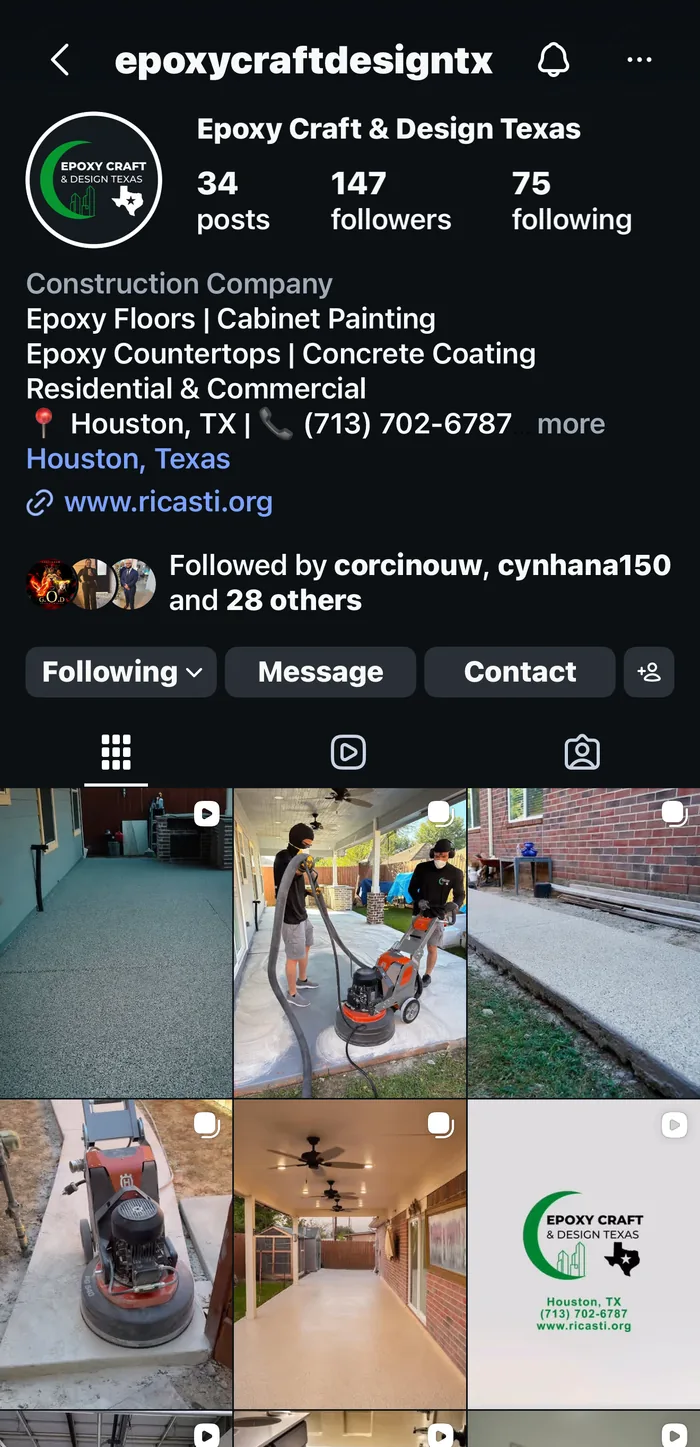
Proof in the economics.
Launch campaigns ran September–November 2025 on a deliberately small budget — this was about proving the foundation, not buying scale.
The headline isn't the volume — it's the efficiency. More than 5,400 visits to a brand-new contractor's website for roughly the cost of a single mid-size job is strong customer-acquisition economics in this category. At thirteen cents a visit, the foundation did the heavy lifting: the ads pointed at a real brand, a real site, and a real way to respond, so the spend converted instead of evaporating. And in a someday-purchase trade, the measurable click is the floor, not the ceiling — tens of thousands of impressions are familiarity banked for the day a floor finally gives someone a reason to call.
This was never a logo or a website in isolation. It was the front end of a business — built so that when someone in Houston finally needs their floor done right, there's a brand ready to earn it.